Top 10 Ways to Prevent Termites in Wooden Cabinets?

Time:2026-11-18 Author:Aria
0%

Wooden cabinets can look solid while termites work behind a back panel or beneath a sink. A small leak, damp wall, or gap around a pipe may create conditions worth investigating. Some termites leave mud tubes; drywood termites may leave small, pellet-like droppings. These signs are clues, not a diagnosis. Not every crumb is termite evidence.

How to prevent termites in wooden cabinets starts with controlling moisture and checking the areas people often overlook. Keep cabinet interiors dry, repair plumbing leaks promptly, and inspect the floor, wall, and pipe openings nearby. Look for blistered finishes, soft wood, discarded wings, or doors that suddenly stop fitting. Take dated photos if something changes. A cabinet can hide damage, so avoid assuming that a clean exterior proves the wood is sound.

This guide outlines ten practical ways to reduce risk, from improving ventilation and sealing access gaps to storing firewood away from the home. It also explains when a qualified pest professional can help confirm activity and recommend treatment. Prevention lowers the chances of an infestation, but it cannot guarantee that termites will never appear. That part is easy to forget. Careful checks, especially after leaks or renovations, make it easier to notice changes early and choose a response based on evidence rather than guesswork.
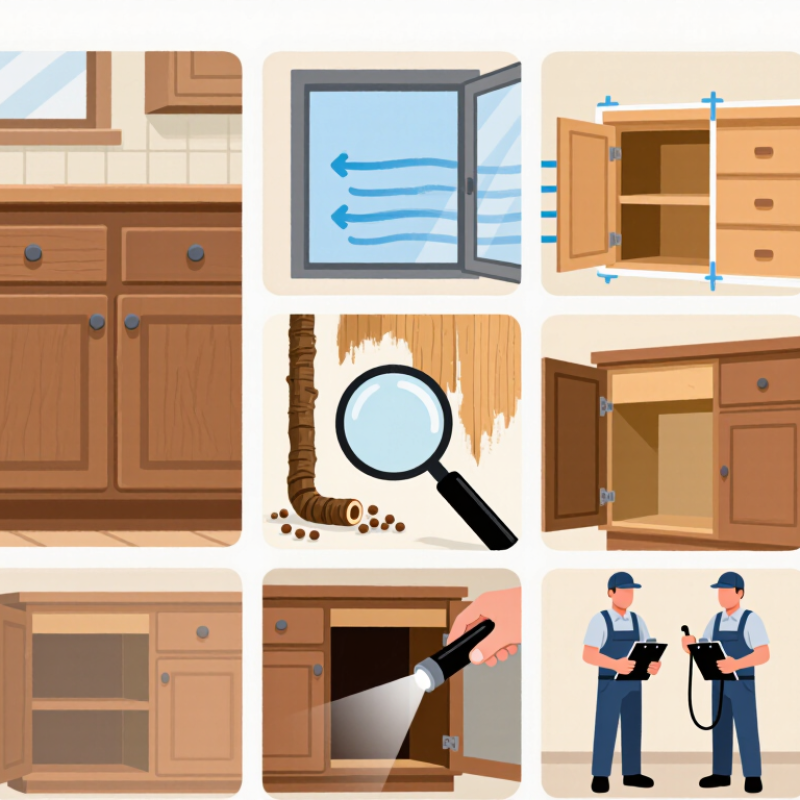
Top 10 Ways to Prevent Termites in Wooden Cabinets?

Inspect Cabinets for 1/32-Inch Termite Entry Gaps (University of Kentucky Extension)

A cabinet can look solid and still have a tiny route for termites. University of Kentucky Extension notes that subterranean termites can enter through openings as narrow as 1/32 inch. That gap is thinner than a credit card. Check where cabinet sides meet floors, walls, and toe kicks. Use a flashlight and inspect the seams slowly.

Look closely around plumbing cutouts beneath sinks. A loose trim edge, an unsealed pipe opening, or a narrow crack beside the wall may deserve attention. Termites may build shelter tubes from soil-colored material along hidden edges. These tubes can resemble dried mud. Do not scrape away suspicious material before taking a clear photo and checking nearby wood for damage. A small opening alone does not prove termites are present.

Open cupboards and examine the back corners, shelf supports, and underside of the cabinet base. A thin card can help reveal a gap, but it cannot confirm an infestation. Keep stored items away from damp cabinet floors, since persistent moisture can make wood more vulnerable. I would not rely on one quick inspection; clutter and shadows make missed spots easy. If you find hollow-sounding wood, shelter tubes, or continuing damage, ask a qualified pest professional to inspect the area.

Control Leaks and Keep Wood Dry; USDA FPL Flags Moisture Above 20%

Top 10 Ways to Prevent Termites in Wooden Cabinets?

Moisture control is one of the most practical ways to protect wooden cabinets. Check beneath sinks, around dishwasher connections, and behind refrigerators for slow leaks. Even a small drip can keep cabinet bases damp for weeks. USDA Forest Products Laboratory guidance identifies wood moisture above 20% as a condition needing attention, particularly because persistent dampness can support wood decay. It does not mean termites are certain to appear, but wet wood deserves prompt investigation. That matters.

Tips: Dry spills immediately, repair leaking pipes, and keep stored items from blocking airflow. A basic moisture meter can help check suspicious cabinet edges. Readings vary with wood type and measurement location, so treat one result as a clue, not a diagnosis.

Look for swollen panels, peeling finishes, musty odors, or soft spots near the floor. These signs can point to moisture problems, though they do not confirm termites. Check again after repairs; a cabinet may feel dry while its back panel remains damp. Ventilate the room and avoid storing wet cloths or cleaning supplies against wood. No routine is perfect, and hidden leaks are easy to miss. If damage continues or you find mud-like shelter tubes, arrange an inspection by a qualified pest professional.

Keep Untreated Wood at Least 6 Inches Above Soil (NPMA Guidance)

Keep untreated wood at least six inches above soil, as the National Pest Management Association (NPMA) advises. That gap makes it harder for subterranean termites to reach wood unnoticed. For a wooden cabinet in a shed or near an exterior wall, check the lowest untreated edge—not just the cabinet legs. Soil, mulch, or leaves piled against the base can erase the clearance. Six inches helps.

Moisture matters, too. A dripping hose or poorly draining downspout can keep soil damp beside wood, creating favorable conditions for termite activity. The NPMA estimates termites cause more than $5 billion in property damage annually in the United States. That figure is a reminder to inspect regularly, not proof that every damp cabinet is infested. Check for mud tubes, soft or blistered wood, and doors that suddenly stick; investigate suspicious signs before replacing the cabinet. The clearance rule is useful, but it is not a force field.

Tips: Measure from soil to untreated wood, then remove soil or mulch touching the cabinet. Keep stored firewood and scrap lumber away from the structure, and fix leaks promptly. Recheck after landscaping changes. I’d still inspect hidden corners; they’re easy to miss.

Top 10 Ways to Prevent Termites in Wooden Cabinets

Key benchmark: Keep untreated wood at least 6 inches above soil to reduce its contact with soil and termite access.

Prevention checklist

  1. Keep untreated wood at least 6 inches above soil.
  2. Prevent wooden cabinets and other wood materials from touching soil.
  3. Repair plumbing leaks and other sources of excess moisture.
  4. Keep gutters and downspouts clear and direct water away from the building.
  5. Maintain good drainage around the foundation.
  6. Keep firewood, lumber, and wood debris away from the building.
  7. Avoid piling soil or mulch against wood siding or foundation edges.
  8. Seal gaps around pipes and utility openings where practical.
  9. Keep crawl spaces and other enclosed areas dry and well ventilated.
  10. Inspect wooden cabinets and nearby areas periodically for signs of termite activity.

The chart shows the 6-inch clearance benchmark; the checklist summarizes practical moisture, contact, and inspection measures.

Seal Cabinet Joints and Use EPA-Registered Termite Products as Labeled

Wooden cabinets can hide small entry points where side panels meet, backs attach, or trim touches the wall. Inspect these seams with a flashlight, especially under sinks and near damp floors. Small gaps matter. Remove dust and loose debris before applying a suitable, paintable sealant. Keep it dry. Fix leaks first, since trapped moisture can damage wood and attract pests.

Sealing helps block access, but it does not eliminate a colony inside a wall or cabinet. If you see mud tubes, discarded wings, or fresh wood damage, pause and arrange a qualified inspection rather than covering the evidence. For additional protection, choose an EPA-registered termite product only if its label specifically permits the intended location and use. Follow the label exactly, including application amounts, ventilation, protective equipment, and re-entry instructions. Never assume a product is suitable for cabinet interiors or food-preparation areas.

I once thought a neat bead of caulk would solve every gap; that was too simple. Check sealed joints periodically for cracking, swelling, or new moisture stains. Avoid drilling or applying liquid treatments into cabinet panels unless the label allows it and you understand what lies behind them. Careful sealing and label-directed prevention can reduce risk, but they cannot replace inspection when signs of termites appear.

Schedule Annual Professional Inspections (NPMA Guidance)

The National Pest Management Association recommends annual termite inspections, especially in areas where termite activity is common. A qualified pest professional can check more than the visible cabinet doors. They may inspect cabinet backs, toe-kicks, nearby baseboards, plumbing penetrations, and accessible areas behind appliances. These spots can hide damp wood or early termite evidence.

Before the visit, empty lower cabinets and clear items from the floor near sinks and exterior walls. Point out any soft wood, bubbling paint, discarded wings, or narrow mud-like lines. A professional can assess these clues and explain whether further investigation is needed. An inspection is not a guarantee. Termites can remain hidden, and a quick glance may miss activity inside a wall.

Keep the appointment even when everything looks fine. That is the part homeowners sometimes skip. Ask the inspector to note moisture problems and vulnerable areas in writing, so you can track changes from year to year. If a pipe has leaked beneath the sink, mention when it happened and whether the cabinet base still feels damp. Small details matter, though they are easy to forget.

FAQS

Why does moisture matter for wooden cabinets?

Persistent dampness can support wood decay and may attract termite activity. Wood moisture above 20% deserves attention. That is a warning, not proof of termites.

Where should I check for leaks?

Look beneath sinks, around dishwasher connections, and behind refrigerators. A slow drip can keep a cabinet base damp for weeks.

What signs may point to a moisture problem?

Watch for swollen panels, peeling finishes, musty odors, or soft spots near the floor. These clues do not confirm termites.

Can a moisture meter diagnose cabinet damage?

It can help check suspicious edges. Readings vary by wood type and location, so treat one result as a clue. Not a diagnosis.

How can I help keep cabinets dry?

Dry spills quickly, repair leaks, and leave airflow around stored items. Avoid placing wet cloths or cleaning supplies against wood.

How often should cabinets be checked by a professional?

Annual inspections are recommended, especially in areas with common termite activity. A professional may check toe-kicks, cabinet backs, and nearby baseboards.

What should I do before an inspection?

Empty lower cabinets and clear the floor near sinks and exterior walls. Point out soft wood, bubbling paint, discarded wings, or mud-like lines.

Does a clean-looking cabinet mean there are no termites?

Not necessarily. Termites can stay hidden, and a quick look may miss activity inside a wall. I sometimes forget to check the back panel, too. Keep notes about leaks and damp areas for the next inspection.

Conclusion

How to prevent termites in wooden cabinets starts with spotting problems early. Inspect cabinet interiors, backs, and joints for mud tubes, damaged wood, or tiny entry gaps about 1/32 inch wide. Fix plumbing leaks promptly, improve ventilation, and keep cabinets and surrounding areas dry; wood moisture above 20% can increase the risk of termite activity. Avoid storing damp materials inside cabinets, and investigate musty odors or unexplained moisture stains.

Reduce access to food and shelter by keeping untreated wood at least 6 inches above soil and away from the building’s foundation. Seal cabinet joints and cracks where appropriate, and use only termite-control products registered for the intended use, following all label directions. Arrange a professional inspection each year, especially if the home has a history of termites or persistent moisture problems. Regular checks and quick repairs can help protect cabinets before minor warning signs become serious damage.

Aria

Aria

Aria is a dedicated marketing professional with a deep passion for innovative strategies and a keen understanding of our company's product offerings. With a wealth of experience in the industry, Aria excels at crafting engaging content that highlights the unique features and benefits of our......