China Best Soft Close Drawer Slides How to Install?

Time:2026-10-20 Author:Liam
0%

Choosing China’s best soft-close drawer slides is only part of a successful cabinet project. Installation determines whether the drawer glides quietly or drags against the frame. How to install soft-close drawer slides requires accurate measurement, suitable tools, and patience during adjustment. A premium slide cannot correct a crooked cabinet opening.

Cabinetmaking educator Gregory Paolini offers a useful reminder: “Measure twice, install once.” This principle matters when marking the slide position inside a narrow cabinet. Check the drawer box width first. Most side-mount slides need consistent clearance on both sides, often about 12.7 millimeters per side. Confirm the manufacturer’s specification before drilling. Product measurements can differ.

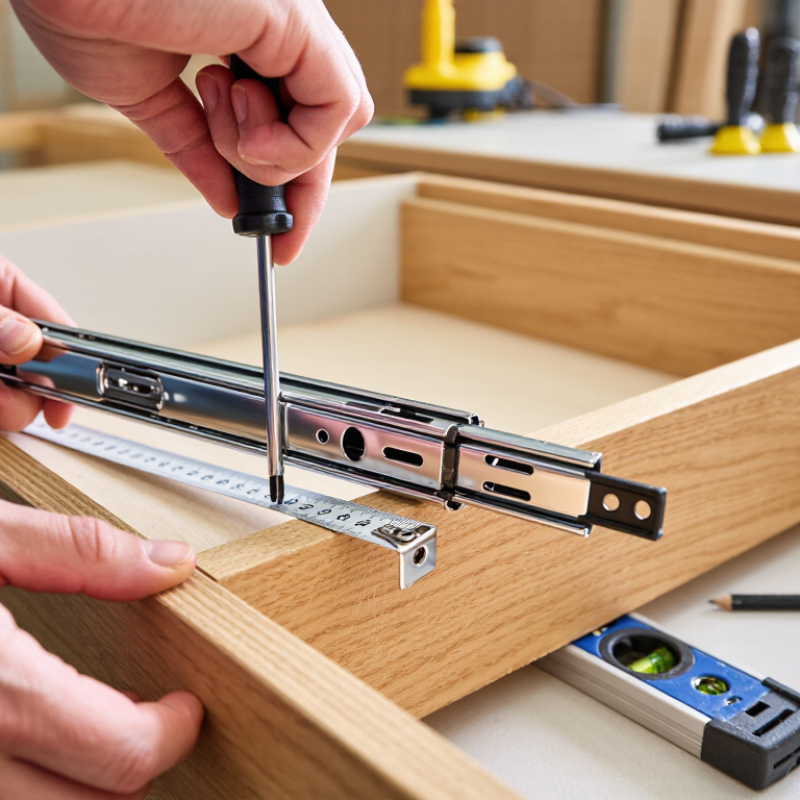
Place the cabinet members at equal heights. Use a small level and a sharp pencil. Keep the front edges aligned with the cabinet face frame. Attach the drawer members beneath the drawer sides, using the supplied screws. Do not overtighten them. Excess pressure can distort the slide channel.

Push the drawer inward until both sides engage. Listen for the soft-close mechanism. It should catch smoothly, not snap or resist. Remove the drawer if movement feels uneven. Recheck the clearances and screw alignment.

This process sounds simple. It is not always forgiving.

A slightly tilted slide may remain unnoticed until the drawer carries heavy dishes. I have seen installers blame the hardware before checking the cabinet box. That mistake is understandable, but avoidable. Careful fitting, repeated testing, and honest inspection create reliable results, especially when installing soft-close drawer slides sourced from China.
China Best Soft Close Drawer Slides How to Install?

Types of Soft-Close Drawer Slides and Key Selection Criteria

Choosing the best soft-close drawer slides begins with understanding their types. Side-mount slides attach visibly to the drawer sides and suit many cabinet repairs. Undermount slides hide beneath the drawer, creating a cleaner appearance and smoother movement. Bottom-mount designs support the drawer underneath and can simplify replacement work. Each type needs different spacing, so measure the cabinet opening before ordering.

Load capacity matters. A kitchen drawer holding pans needs stronger slides than a bedroom drawer holding clothing. Full-extension slides let the drawer reach the back, while partial-extension models leave some storage hidden. Check the slide length, closed depth, mounting clearance, and drawer box thickness. Soft-close dampers should pull the drawer shut gently, without slamming or stopping too early. Good adjustment features also help correct small alignment errors.

I measure twice, but my first installation was still slightly uneven. The drawer rubbed because one slide sat two millimeters higher. Small mistakes matter. Use a level, mark both sides carefully, and predrill holes in hard wood. Install the slides parallel to each other, then test the drawer with a light load. Screws should fit securely without piercing the drawer wall. If the closing action feels weak, inspect the load and alignment before blaming the mechanism. A practical trial with the actual drawer contents often reveals problems that an empty drawer hides.

China Best Soft Close Drawer Slides How to Install? - Types of Soft-Close Drawer Slides and Key Selection Criteria

Comparison of Common Soft-Close Drawer Slide Types
Slide Type Typical Installation Position Typical Load Range Common Extension Recommended Applications Main Advantages Important Limitations
Side-Mount Ball-Bearing Mounted vertically on both drawer sides Approximately 25–45 kg per pair, depending on model and cycle rating Three-quarter or full extension Kitchen cabinets, office furniture, storage drawers, and retrofit projects Simple installation, broad size availability, and good load capacity Side clearance is visible; usually requires about 12.7 mm clearance on each side
Undermount Installed beneath the drawer, usually on both sides Approximately 25–40 kg per pair for standard residential models Usually full extension Premium cabinetry, kitchens, bathrooms, and concealed-hardware furniture Hidden appearance, smooth movement, and integrated adjustment on many models Requires accurate drawer-box dimensions, compatible hardware, and precise installation
Center-Mount Mounted centrally beneath the drawer Approximately 15–25 kg per pair or assembly Commonly three-quarter extension Small drawers, light-duty furniture, and replacement applications Economical and suitable where side space is limited Lower stability and load capacity than most side-mount or undermount systems
Heavy-Duty Soft-Close Usually side-mounted or reinforced under-mounted Approximately 45–100 kg per pair, subject to the specified test standard Full extension is common Tool cabinets, pantry pull-outs, wide drawers, and commercial furniture High load capacity and improved support for wide or heavily loaded drawers Higher cost, greater installation accuracy requirements, and increased cabinet clearance needs
Soft-Close Drawer Slide Installation and Selection Checklist
Item Recommended Practice or Measurable Requirement Why It Matters
1. Measure the cabinet Measure the clear opening width, cabinet depth, and vertical opening. Select the slide length so it does not exceed the usable cabinet depth. Incorrect length can prevent full closing or cause the rear of the slide to contact the cabinet.
2. Confirm drawer dimensions For many side-mount slides, allow approximately 12.7 mm clearance on each side. Always follow the selected slide's technical drawing because clearances vary. Too little clearance causes binding; excessive clearance creates side movement and uneven closing.
3. Match the load rating Calculate the drawer, hardware, and contents together. Choose a slide with a rated capacity above the expected working load. A suitable safety margin improves service life and reduces premature soft-close failure.
4. Mark mounting positions Use a level and measuring square to mark matching positions on both cabinet sides and both drawer sides. Parallel and level mounting prevents rubbing, uneven gaps, and excessive operating force.
5. Fix the cabinet members Fasten the cabinet-side members with the recommended screw size, keeping the front reference line consistent on both sides. Consistent positioning ensures that the drawer enters the soft-close mechanism evenly.
6. Fix the drawer members Mount the drawer members at equal heights and keep them parallel to the drawer bottom or approved reference line. Misaligned members may produce noise, uneven travel, or incomplete closing.
7. Insert and adjust Insert the drawer, operate it several times, and use the available height, side, or depth adjustment features where provided. Fine adjustment helps achieve even reveals and reliable soft-closing action.
8. Test performance Check smooth opening, full extension, quiet closing, consistent gaps, and secure attachment under the intended load. Testing confirms that the selected slide matches the drawer size, weight, and usage frequency.
9. Key selection criteria Evaluate slide type, length, extension, load rating, side clearance, material and finish, adjustment range, cycle life, installation method, and replacement compatibility. These factors determine appearance, function, durability, installation difficulty, and total project cost.

Note: Load capacities and clearances are typical industry ranges. Always verify the manufacturer's technical drawing and test conditions before final selection.

Tools, Materials, and Measurements Required for Installation

China Best Soft Close Drawer Slides How to Install?

Accurate tools make soft-close drawer slide installation safer and more repeatable. Prepare a steel tape measure, combination square, pencil, level, drill, drill bits, screwdriver, clamps, and a depth gauge. You will also need matching slides, approved screws, spacers, and thin shims. The 2024 Houzz U.S. Kitchen Trends Study reports that 76% of renovating homeowners upgrade their cabinets, showing why reliable drawer hardware matters during remodeling.

Measure twice. Still, check again.

Measure the cabinet opening width, interior depth, drawer-box width, and drawer-box length. Many side-mount slides require about 12.7 mm of clearance on each side, but confirm the installation sheet because tolerances differ. Keep the slide parallel to the cabinet bottom. A 1 mm error can make soft closing feel uneven.

Mark both sides with a square, then pre-drill shallow pilot holes to reduce splitting. Install the cabinet members first, followed by the drawer members. Use a level to compare both rails before tightening every screw.

Do not force the drawer into place. A drawer that binds may have incorrect clearance, a twisted box, or screws sitting proud. My first measurement often looks correct but ignores the cabinet back panel. Leave practical depth clearance, not merely the listed slide length. Test the drawer with light and heavier loads, then adjust the shims if the closing action feels slow or harsh. Record the final measurements for future replacements.

How to Prepare the Cabinet and Drawer for Slide Mounting

Before installing soft close drawer slides, inspect the cabinet opening carefully. Remove the drawer and clear sawdust, screws, and loose edging. A clean surface improves accuracy.

Measure the cabinet width at the front, middle, and back. These measurements may differ in older cabinets. Use the narrowest point when checking slide clearance. Most side-mounted slides need equal space on both sides, but always verify the slide’s instructions. A steel tape is more reliable than guessing.

Check that the cabinet floor and side panels are sound. Reinforce weak particleboard with suitable wood strips if necessary. For face-frame cabinets, mark the frame and rear mounting points before drilling. Frameless cabinets usually allow straighter side mounting. Keep both slide lines level and parallel. Even a small slope can make the soft-close action feel rough.

Measure the drawer box separately. Confirm its width, depth, and height, then inspect the bottom for warping. I have learned that a drawer can look square but still twist under pressure. Place it on a flat surface and compare both diagonals. They should be nearly equal. Mark the slide positions with a sharp pencil, not a thick marker. Pre-drill shallow pilot holes to reduce splitting. Do not overtighten the screws. I sometimes test-fit one side first, because perfect measurements can still meet imperfect wood. Leave the protective film on until alignment is confirmed.

Step-by-Step Method for Installing Soft-Close Drawer Slides

China Best Soft Close Drawer Slides How to Install?

Installing soft-close drawer slides needs accurate measurements and a level cabinet. Remove the drawer and empty the cabinet opening. Measure the drawer depth, then confirm the slide length matches it. Mark both cabinet sides at the same height. Use a level, pencil, and small drill bit. Attach the cabinet members first, keeping their front edges flush. Uneven positioning can cause rubbing or incomplete closing.

My first installation was slightly too tight. The drawer moved, but the soft-close mechanism felt stiff. Leave the clearance specified by the slide instructions. Pre-drill pilot holes to prevent damaged wood. Secure each screw without overtightening. Then attach the drawer members underneath or along the drawer sides. Refit the drawer and press it inward until both slides engage.

Tips: Test the drawer before filling it. Pull it open several times and check the closing speed. If one side closes earlier, recheck the slide height. A thin spacer can help maintain equal gaps. Do not force the drawer into place. Small measurement errors become obvious during daily use. If the drawer sits unevenly, remove one screw and adjust the slide gradually. Take your time here.

How to Adjust, Test, and Maintain the Installed Slides

After installing soft-close drawer slides, adjustment matters as much as accurate mounting. Place the cabinet on a level surface and check whether the drawer front sits evenly. If the slide includes adjustment screws or cams, move them in small increments. Correct side-to-side gaps gradually, rather than forcing one screw too far. Keep both slides at the same height. Small changes matter.

Test the drawer with light pressure. It should travel smoothly, remain level, and close without bouncing. Listen carefully. Scraping, clicking, or uneven resistance usually indicates a loose screw, a twisted cabinet, or poor slide alignment. Remove heavy contents during testing. Then add weight slowly and repeat the movement several times. The soft-close mechanism may feel firm at first. That is not always a defect. However, a drawer that stops halfway needs inspection.

Maintenance is simple but easy to neglect. Wipe dust from the slide members with a dry, lint-free cloth every few months. Do not apply thick grease unless the installation instructions permit it, because grease can collect grit. Tighten loose mounting screws, but avoid overtightening them. Check the drawer after seasonal humidity changes, especially in kitchens. My own fitting habits would benefit from slower final checks; rushing this stage can hide a small alignment error until daily use exposes it.

FAQS

What tools are needed to install soft-close drawer slides?

Prepare a steel tape measure, combination square, pencil, level, drill, bits, screwdriver, clamps, and thin shims. A depth gauge can help with deep cabinets.

How much side clearance does a drawer usually need?

Many side-mount slides need about 12.7 millimeters on each side. Always confirm the slide instructions. Small errors matter.

How should cabinet slide positions be marked?

Mark both cabinet sides at the same height with a square and pencil. Keep the rails parallel to the cabinet bottom. Use a level before tightening screws.

Should pilot holes be drilled before installing the screws?

Yes. Drill shallow pilot holes to reduce wood splitting. Secure screws firmly, but avoid overtightening. I sometimes rush this step.

Which parts should be installed first?

Attach the cabinet members first. Keep their front edges flush. Then attach the drawer members underneath or along the drawer sides.

Why might a drawer bind after installation?

Incorrect clearance, uneven slide heights, a twisted drawer box, or raised screw heads can cause binding. Check the cabinet back panel too. Listed slide length is not usable depth.

How can soft-close action be tested correctly?

Test the empty drawer several times before adding contents. It should move smoothly, remain level, and close without bouncing. Then add weight gradually.

What should be done if one side closes first?

Recheck both slide heights and side gaps. Adjust screws or cams in small increments. A thin spacer may restore equal spacing.

How should installed slides be maintained?

Wipe dust away with a dry, lint-free cloth every few months. Tighten loose screws without overtightening them. Avoid thick grease unless the instructions permit it.

Conclusion

This guide explains how to install soft-close drawer slides safely and accurately, beginning with the main types and key selection criteria. It covers side-mount and undermount options, weight capacity, drawer dimensions, clearance requirements, and the importance of choosing slides that match the cabinet and drawer structure. It also lists the necessary tools and materials, including a measuring tape, pencil, drill, screws, level, and suitable templates or spacers.

The installation process includes measuring and marking the cabinet and drawer, checking alignment, pre-drilling mounting holes, and securing each slide in the correct position. Readers will learn how to install soft-close drawer slides step by step while avoiding common problems such as uneven gaps, binding, or drawers that do not close fully. The final sections explain how to adjust the slides, test smooth operation, correct minor alignment issues, and maintain the hardware by keeping it clean and checking the mounting screws periodically.

Liam

Liam

Liam is a dedicated marketing professional with a profound expertise in the industry, where he excels at highlighting the unique advantages of our core products. With a keen understanding of market trends and consumer needs, Liam frequently updates our company’s professional blog, providing......