A high-quality wardrobe should do more than look attractive in a showroom. It must carry daily weight, open smoothly, resist moisture, and remain stable after years of use. Learning How to tell if a wardrobe is high quality starts with details that are easy to overlook: panel thickness, joint construction, back-board support, hardware strength, and edge finishing.
Industry standards provide a useful reference. EN 14749 outlines safety and strength requirements for domestic storage furniture, including wardrobes. FIRA, the Furniture Industry Research Association, also emphasizes stability, durability, and suitable material selection in furniture assessment. These guidelines matter because a polished surface can hide weak joints or poorly supported shelves. It happens more often than buyers expect.
Environmental performance is another quality signal. The U.S. Environmental Protection Agency’s Sustainable Materials Management data identifies furniture and furnishings as a major municipal waste category. The Ellen MacArthur Foundation also reports that extending product use can reduce resource pressure across the textile and furniture-related supply chain. A wardrobe that lasts longer may prevent repeated replacement, even when its initial price is higher.
This guide examines ten practical checks, from inspecting screw connections to testing drawer movement and examining the smell of finishes. You will learn what solid wood, engineered board, veneer, and laminate can realistically offer. You will also see why heavy construction does not always mean better construction. Some attractive wardrobes fail quickly. Others look plain but perform reliably for decades. Quality is not a single material or price tag; it is the result of tested design, honest specifications, and careful workmanship.
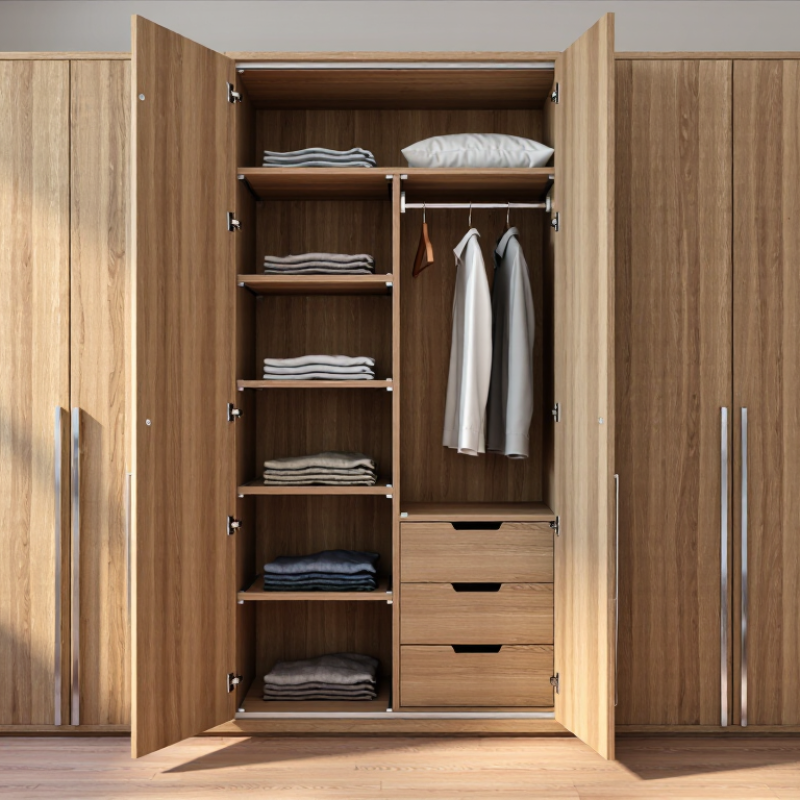
What Defines a High-Quality Wardrobe?
A high-quality wardrobe is defined by more than attractive styling. It begins with dependable fabric, precise construction, and useful design. When inspecting a garment, I check the weave, seam density, lining, buttons, and zipper movement. Strong seams should look even, without loose threads or puckering. Natural fibers can feel breathable, while well-made blends may offer better durability and easier care. Neither choice is automatically superior.
Tips: Hold the fabric toward light. Uneven gaps may reveal weak weaving. Turn the garment inside out. Clean seam finishes often show careful workmanship. Try sitting, reaching, and walking. A quality piece should remain comfortable during movement. Check the care label, too. Maintenance affects its real lifespan.
A reliable wardrobe also fits your daily habits. A beautifully tailored jacket is not high quality if it restricts your shoulders. Colors should coordinate with existing clothes, and pockets should sit securely. I once judged a sweater by its softness alone, then noticed rapid pilling after several wears. That mistake changed my inspection routine. Now I consider recovery, stitching, and long-term use together. Quality is partly measurable, but personal comfort still matters. A careful buyer should question both dramatic details and low prices.
How to Evaluate Materials, Joinery, and Structural Strength
A high-quality wardrobe feels stable before it looks impressive.
I check the panels, shelves, and backboard for dense, even material. Solid wood should show tight grain and few repaired cracks. Quality engineered board has sealed edges and consistent thickness. Thin, swollen edges often reveal moisture damage. Open the doors slowly. They should move quietly, without scraping or sudden drops. A slight smell is not proof of poor quality, but a sharp chemical odor deserves caution.
Joinery tells a more reliable story than decoration.
I look for tight dowels, strong screws, and reinforced corners. Dovetail or mortise-and-tenon joints usually resist pulling forces better than simple staples. The joints should sit flush, with no visible gaps. Press one corner while holding the opposite side. Excessive twisting suggests weak construction. Still, this test is limited. A heavy finish can hide flaws, and one showroom visit cannot prove long-term durability. That uncertainty matters.
Tips:
Load each shelf with a steady hand, not a sudden drop. It should remain level without bending noticeably. Check whether shelf supports fit firmly and whether the hanging rail feels rigid. Inspect the back panel, because a thin, loose panel can make the whole wardrobe sway sideways. Ask for material details, edge-banding information, and a stated weight rating. If the seller cannot answer clearly, pause. Good craftsmanship is often quiet: aligned doors, clean joints, smooth edges, and a frame that stays square.
How to Inspect Hardware, Doors, Drawers, and Interior Fittings
A high-quality wardrobe reveals its construction through small, testable details. I begin with the hardware. Hinges should open smoothly, hold alignment, and resist lateral movement. Drawer runners should feel quiet and controlled, without scraping or sudden drops. Many professional furniture assessments use repeated-cycle testing, often between 40,000 and 80,000 openings, depending on the fitting category. Ask for the tested cycle count, not a vague “premium hardware” claim.
Open every door fully. Check whether gaps remain even at the top and bottom. A door that twists or rebounds may indicate weak hinges, poor installation, or an unstable cabinet. Pull each drawer halfway, then gently from both sides. It should stay level. The CPSC’s 2023 furniture tip-over reporting highlights more than 15,000 emergency-department injuries annually in the United States. Secure anchoring matters, especially for tall wardrobes. Strength comes before appearance.
Inspect the interior with a phone light. Shelves should have sealed edges, firm supports, and no swollen corners. Hanging rails need minimal deflection under normal clothing weight. I also check screw covers, connector joints, and unfinished drill holes. These details expose rushed production. Sometimes, I miss a minor alignment flaw during a showroom inspection. That is worth admitting. Recheck the wardrobe after installation, when doors carry their real load. Standards such as EN 14749 and ISO 7170 provide useful safety and durability references, but actual workmanship still deserves your hands-on inspection.
How to Assess Finish Quality, Functionality, and Storage Design
A high-quality wardrobe reveals its construction before you open the doors. In my furniture inspections, I check whether panels meet cleanly at the corners. Edges should feel smooth, without sharp laminate, swelling, or visible glue. The finish should look even under direct light. Run your hand across it. Fine sanding matters. Hinges should move quietly and hold their alignment. Drawers should glide without wobbling, scraping, or sudden stops. I once trusted a beautiful surface that concealed weak joints, so appearance alone is not enough.
Functionality becomes clear through repeated movement. Open every door fully, then test each drawer with one hand. A reliable wardrobe should remain stable when weight shifts inside. Look for strong back panels, secure handles, and shelves that resist bending. Adjustable shelves are useful, but loose pins can become irritating. Small details matter.
Storage design should match real habits, not showroom styling. Measure the hanging space for coats, shirts, and longer garments. Check whether folded clothes remain visible instead of forming a deep, forgotten pile. Separate compartments can protect accessories, while ventilation gaps may reduce stale smells. Sliding doors save floor space, but they can limit access to one side. Hinged doors need more clearance. A practical inspection also includes the wardrobe’s depth, lighting, and cleaning access. No test is perfect. Your daily routine may expose weaknesses that a showroom never shows.
How to Verify Durability, Safety, Warranty, and Overall Value
A high-quality wardrobe should withstand daily opening, closing, moving, and cleaning. I inspect the frame, joints, hinges, drawer runners, and back panel by hand. Solid connections should feel firm, not loose or hollow. Doors must hang evenly and close without scraping. Small gaps can become bigger problems.
Durability is only one measure. Check whether shelves resist bending under normal clothing loads. Look for smooth edges, stable feet, and finishes that do not peel when lightly rubbed. Safety matters too. Choose rounded corners, secure fittings, low-odor materials, and clear weight limits. Tall wardrobes should include reliable anti-tip hardware. I once ignored a slightly unstable base because the design looked attractive. That shortcut was wrong.
A dependable warranty should explain coverage, exclusions, repair options, and claim procedures in plain language. Keep the receipt, product details, and installation records. Ask whether replacement parts remain available after purchase. A low price may lose its value if hinges fail quickly or repairs become difficult. Compare material quality, storage capacity, assembly time, safety features, and expected service life. Test the wardrobe in person when possible. Listen for rattling. Check the corners closely. Product descriptions can sound reassuring, but physical evidence is often more honest. Some judgments remain uncertain, especially when long-term wear cannot be tested in a showroom.
FAQS
Look for dense, even panels, sealed edges, and consistent thickness. Avoid swollen corners or repaired cracks. Solid wood should show tight grain. Engineered boards should feel dry and firm.
Press one corner while holding the opposite side. Excessive twisting suggests weak construction. Check the back panel carefully. A thin, loose panel can make the wardrobe sway sideways.
Joints should sit flush without visible gaps. Strong dowels, screws, reinforced corners, and fitted connectors are useful signs. Dovetail or mortise-and-tenon joints usually resist pulling better than staples.
Open every door slowly and fully. Movement should feel quiet and controlled. Gaps should remain even at the top and bottom. Scraping, sudden drops, or rebound may indicate installation problems.
Pull each drawer halfway, then gently from both sides. It should stay level and glide without scraping. Check the runners, handles, screw covers, and unfinished drill holes. Small flaws matter.
Place weight steadily on each shelf. Do not drop anything suddenly. The shelf should remain level without noticeable bending. Hanging rails should feel rigid under normal clothing weight.
Run your hand across the surface under direct light. Edges should feel smooth, with no sharp laminate, swelling, or visible glue. A strong chemical smell deserves caution. Appearance can mislead.
Measure space for coats, shirts, and longer garments. Check whether folded clothes stay visible instead of disappearing into deep piles. Sliding doors save floor space, but hinged doors provide wider access.
No single test proves long-term durability. Heavy finishes can hide weak joints. I once trusted a beautiful surface too quickly. Recheck the wardrobe after installation, when real weight exposes problems.
Conclusion
How to tell if a wardrobe is high quality begins with examining its materials, construction, and overall stability. A well-made wardrobe uses durable, responsibly selected materials, precise joinery, strong structural panels, and a balanced frame that does not wobble or bend. Check whether doors and drawers open smoothly, align properly, and remain secure during use. Reliable hinges, handles, runners, and interior fittings should feel sturdy, operate quietly, and support regular daily use.
Finish quality is equally important. Look for even surfaces, clean edges, consistent coatings, and carefully sealed details that resist wear. A practical wardrobe should provide thoughtful storage, sufficient ventilation, safe movement, and easy access to its compartments. Finally, consider its expected lifespan, safety features, care requirements, warranty coverage, and total value rather than focusing only on its initial price. A high-quality wardrobe combines durable construction, dependable functionality, attractive finishing, and storage design that continues to meet your needs over time.

 Arico Home